Talking about society, marketing, food, technology, media, fun & games, education, funny stories, food, art and more. New episodes every Thursday.

Talking About Modern Mexico its Cuisine and Ingredients-Ep39

In early January 2016 I visited Mexico City and followed up with Nicholas Gilman (Episode 38), to talk about and understand the modern heartbeat of Mexican cooking. For the transcript of our discussion click here.

Nicholas Gilman and I met up at Restaurant Limosneros for several conversations with the owner Juan Pablo but before we spoke with him Nicholas and I talked about the history of the area and what he means by Modern Mexican Cuisine.

Mexico City Limosneros

The restaurant is located in the central historical district. An area of Mexico City that was heavily damaged by the 1985 earthquake. An area that has slowly been growing, changing and evolving. The area has received lots of investment and redevelopment including funds from Mexican businessman Carlos Slim.


The building that houses Limosneros is made of many types of stones and dates from the 1600's and has it's own very special charm. It also highlights that Mexico City is a city built on it's own history. It is located about 300 feet from the Cathedral of the Assumption of the Most Blessed Virgin Mary into Heaven (Spanish: Catedral Metropolitana de la Asunción de la Santísima Virgen María a los cielos). This large central cathedral is literally built from the stones of an Aztec temple; stones from the destroyed temple of the Aztec god of war Huitzilopochtli, principal deity of the Aztecs.


limosneros mexico city


Stay tuned for episodes 40, 41 and 42 when Nicholas and I speak with Juan Pablo Ballesteros about the food and beverages served at Limosneros.


Links:

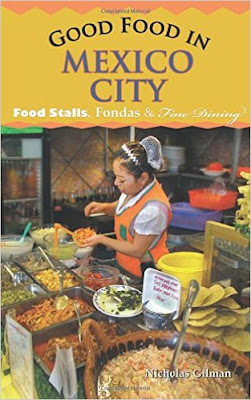
Nicholas's Book (Amazon): Good Food in Mexico City: Food Stalls, Fondas & Fine Dining (Kindle edition) / GoodFoodMexicoCity.com / The Essential Guide to Modern Mexican Dining in Mexico City


(00:00:00)
Nicholas Gilman:
I returned to Mexico City in 1986. I was lured by the sordid, thrilling cauldron of mysterious activity. The past lingered over a decrepit, crumbling Centro Historico, which had been brought to its knees by the recent earthquake. The Centro intrigued me. I observed dusty alleys and hallways into which scurried enigmatic characters who disappeared into their anachronistic places of business. Photographers hidden under a cloth with a huge camera like those in silent movies took oval sepia portraits. Nightclubs featured old-fashioned cabaret performers, acts with names like Yolanda Y Su Perla Negra. Food decidedly caught my attention.

(00:00:40)
Harry Hawk:
Hello. This is Harry Hawk, and this is Talking About Everything, and I’m here with Nicholas Gilman. I know for sure I am in Mexico City, but Nicholas, where am I?

(00:00:52)
Nicholas Gilman:
You are in downtown Mexico City, what we know as and call the Centro Historico or the historic center. We are at the epicenter of where it all started. We’re 3 hundred yards or so from the great cathedral, which is built with the foundation stones of the great pyramid of Tenochtitlan, a center of the Aztec kingdom. That’s where we are.

(00:01:19)
Harry Hawk:
Wow. I have to say, it’s taken me a little bit to adjust. It’s a little bit of global warming, but it’s very cool today. You can hear that we’re in a city. We got noises and this is definitely…we’re not in the studio, but I am looking around. We’re inside of a restaurant and you’re going to tell us about it, but I’m just blown away. I know I’m looking at historical stones, but it’s also completely modern and I guess that’s a metaphor for Mexico today.

(00:01:45)
Nicholas Gilman:
That is definitely a metaphor for modern Mexico. We are in a historic building, a colonial building that’s over 3 hundred years old. This is yet a modern Mexican restaurant that’s based on tradition, but has turned tradition upside down. I’d like to talk a little bit about the background of this whole area and set it in its place. We are in what has always been, or at least since the colonial era of the 19th century and before, the area where people went out, where people lived, where the culture was based, where religion was based, and later in the 20th century where night life was based and every fancy restaurant, department store, theater, concert hall, nightclub was around here and what happened was, like many downtowns across the world, this area started to fall into a decline in the late 20th century, but it was really accelerated by the big earthquake that you probably know about of 1985 that just put a nail in the coffin. It was terribly, terribly damaged. The whole area after the earthquake was shut down. Big grand hotels fell. Houses fell. All kinds of buildings fell. Government buildings fell because the government buildings are based down here, too.

(00:03:12)
Harry Hawk:
Nicholas, just again to contextualize a little bit, so when I think of ’85 and I think of declining downtowns and all of this, I think in the United States of Faneuil Hall in Boston, and I think about South Street Seaport in New York, and many places all around America that went through this incredible decline in the ‘60s or ‘70s and then at some point, came out of it.

(00:03:30)
Nicholas Gilman:
Here, it happened a little bit later. It really was all about that earthquake, Mexico City, and it was also for some of the same reasons that it was happening in the United States. These downtown areas were thought to be dangerous and unsavory and that was true here, too, but the earthquake really destroyed it and people stopped coming. They felt it was dangerous. There was nothing going on here. Twenty years ago when I came to Mexico, I used to stay down here, but at night, it was dead. There was absolutely nothing happening. You could’ve heard a pin drop. There were no stores open. There were no restaurants open. It was just over and that started to change about two or three years ago when Carlos Slim, who’s one of the richest men in the world, started to invest in this area and for probably reasons of his own wanted to bring it back and it has come back.

(00:04:25)
Harry Hawk:
So this is a very recent occurrence then.

(00:04:28)
Nicholas Gilman:
It’s a very recent occurrence. It’s all within the last three or four years.

(00:04:31)
Harry Hawk:
To set the scene, when I walked into this restaurant downstairs, there’s a small shop in the front, and I walked into the restaurant, and I could be anywhere in the world, meaning for a well put together restaurant, the servicescape, the tables, the lighting, everything is interesting. Everything is absolutely clean, and spotless, and thoughtful and I have no idea that I’m anywhere but someplace that is composed. When you walk into that kind of restaurant, you immediately feel relaxed. You immediately feel the hospitality of the place.

(00:05:04)
Nicholas Gilman:
Yes, but you say anywhere in the world, but not, because when you look close, every detail of this place is about Mexico. The architecture is about Mexico. The design, all the elements that go into the design, and the furniture, and the art work on the walls, the products being sold in that nice shop that you talk about at the entrance, then you sit down, you hear Mexican music. Everything on the menu is Mexican. Everything in the bar, and that’s something that they’re particularly proud of here, is Mexican and this kind of restaurant, a new restaurant in the center had not opened on this scale for many decades. This was the first to open three years ago. There are some old elegant restaurants, but very few and it really was a sign of the revival of the downtown because it’s what I call a modern Mexican restaurant. It’s post-modern, in fact, and there wouldn’t have been a public for it a few years ago.

(00:06:02)
Harry Hawk:
It’s certainly post-modern. I haven’t had a chance to try the food, obviously, but I think we will today for sure, but I was offered a beer earlier by Juan Pablo, the gentleman we’re going to be speaking to, and again, as a restaurant operator in New York, what I know is the commercial beers that are exported and here he has a whole list of craft beer.

(00:06:20)
Nicholas Gilman:
He doesn’t serve those commercial beers in this one.

(00:06:22)
Harry Hawk:
We know craft beer. We know that is a culture juggernaut all of its own, but to find it here, and to find that what I had was excellent, and that’s local, and that’s…it blew me away, in fact.

(00:06:32)
Nicholas Gilman:
Of course, going on in the city in general at most of the high end restaurants, and even some of the middle level restaurants, people, chefs, cooks, restaurant owners are taking advantage of the amazing bounty that we have in this area and in Mexico in general. We’re an amazing country. We have everything from soup to nuts, quite literally.

(00:06:53)
Harry Hawk:
I want to say something. You say we, but you are now a Mexican citizen, yes.

(00:06:57)
Nicholas Gilman:
I am.

(00:06:58)
Harry Hawk:
So we.

(00:06:58)
Nicholas Gilman:
We.

(00:07:00)
Harry Hawk:
So thank you for showing me around your country.

(00:07:03)
Nicholas Gilman:
Yes, you’re very welcome.

(00:07:04)
Harry Hawk:
Let me ask you about that. As an immigrant, so to speak…I know you’ve lived here for many, many years, does it give you an eye, you think, that maybe things that locals don’t see?

(00:07:12)
Nicholas Gilman:
Absolutely. So many people have said to me that it takes somebody from outside to see and appreciate the riches that this country has to offer, especially when it comes to what is my field of interest, which is food. I think that people in their own country don’t always see and when it comes to the city itself, people tell me about how amazed they are that I will go to these neighborhoods, markets, holes in the wall to eat because I have no fear of them, the places that they have never been themselves. I think that aspect of it is true and the other aspect of it that I bring with me as an American born person is the idea that I can and should do something that nobody has done before. I have that sort of American ingenuity that I brought down here with me so when I came, I started compiling all this information about local food and it was my idea to do a book because nobody had done the book before. I think that’s very American, don’t you?

(00:08:17)
Harry Hawk:
I definitely agree. It is American in both a literary sense and in a trailblazing sense and that we need to know, we want to know where to go when we’re traveling. We want to research and think about it. I think understanding where we are, in which country, which city, which part of the city and I think when you hear it in Spanish, maybe it doesn’t necessarily resonate with everybody, but the way you said, the historical center of the city, because we all know that no matter what town we grew up in, whether it was in Vermont where there’s an old town center sheep meadow to someone who grew up in Boston, Philadelphia, Los Angeles, wherever, we know that old…

(00:08:54)
Nicholas Gilman:
Well, that’s certainly true in the west. It’s not so true in Asian cities. I just got back from a tour of China and Thailand and Asian cities don’t have downtowns and it’s very hard for us to understand that. They have no center. There is no center of Tokyo. There are many centers of Tokyo and Bangkok, but all Latin cities are based on the European model, which is basically Spain, and evolve around a center and we have, in fact, not two, three blocks from where we’re sitting right now, the largest public plaza in the Americas, in North or South America. I think it’s third after Tiananmen Square and Red Square in Moscow in sheer size and on one side of it is the Metropolitan Cathedral, the other side is the government palace where president holds court and it’s surrounded by government buildings, but has since the very beginning been the center of this city and the city kind of expanded out from that.

(00:09:52)
Harry Hawk:
So as we’re talking about expansion, and we’re talking about growth, and here we are in Mexico in Mexico City in the center of the city and we’re talking about the food here and not just the cultural historical food, although certainly that’s my interest, but we all know that now food, as people seek entertainment, but they seek experience, as food is an incredible experience because we all need to experience it on a regular basis to sustain us and we know throughout the world now this culinary tourism is growing. So what I think, if this makes sense, I don’t know if there is anything else that you prepared to say, but that I think what we should do now is really have a conversation about the ingredients and about how that’s used here. I think that would put it all in context.

(00:10:39)
Nicholas Gilman:
As you probably know, certain aspects of Mexican cuisine have been recognized by UNESCO in the past couple of years as being, I don’t know how to say it in English, patrimonio del la humanidad.

(00:10:52)
Harry Hawk:
Part of the patrimony of the country.

(00:10:53)
Nicholas Gilman:
Of the humanity and it is finally being seen, and recognized, and talked about the fact that Mexican gastronomy is a very complex and big thing and unfortunately, most people outside of the country don’t know about it. They know what they know through American fast food versions of it.

(00:11:12)
Harry Hawk:
A quick plug for the New York City Food Film Festival of which I am a co-creator, we did a film a few years ago about how Mexican cuisine has influenced the world, talks about what we would think as a non-Mexican dish, but the film goes through a whole bunch of these and each one it relates to how it essentially originated in Mexico.

(00:11:30)
Nicholas Gilman:
Well, you know that certain ingredients that are essential to other cuisines around the world, such as chilies, came from Mexico. Chocolate came from Mexico. Certain spices came from Mexico. Squash came from Mexico. Tomatoes, what could be more essential to much of the Mediterranean than tomatoes. They came from Mexico. They were brought by the Spaniards. They were brought by the Portuguese traders to the Philippines and later to Asia and there were no chilies in China. There were no chilies in India before the Americas were so called discovered and that it is just the top of the iceberg. It was always a back and forth. We’re talking about migration now and I hope to speak with my friend, another chef, Josefina Santa Cruz, who is going to tell us about that because that’s her specialty. The interchange that has gone on, it’s not just contemporary, current globalization that many of us kind of celebrate and lament at the same time, it’s been going on for 5 hundred years.

(00:12:28)
Harry Hawk:
It’s true and this is exactly the point that the particular film made in that we have to find this way to keep our local things, but to understand that we’re in the global village and that’s why I’m really excited about the conversation that we’re going to have today in as much as again, I had a beer a few moments ago. I mentioned that I could have been served that beer in Brooklyn, but I wasn’t. I was served it in Mexico City, but it’s a world class beer and local ingredients done, I think, if I was to try a sampling of the beers, which I would not want to do before having a conversation, prefer to be sober for this, but my guess is that I would find some unique flavors and if I got to understand the ingredients…

(00:13:07)
Nicholas Gilman:
Obviously, beer is kind of a unifying force. They have beer around the world. They have chicken around the world and there are certain foods that are really very global and have been for a very long time, but we had a German population, German immigration in Mexico in the 19th century and they’re the ones that brought beer so it’s been part of the culture here for over a hundred year…well, 150 years, I would say.

(00:13:31)
Harry Hawk:
I’m really excited and I know we’ll get to talk about some of the more famous Mexican beverages, the tequilas, and the mescals, and all of that, as well so I think this is a good place to pause and I’m going to change the batteries before we begin, but did you want to go through any of that. You want to do that?

(00:13:49)
Nicholas Gilman:
Sure. I’ll read that…so I just wanted to read you something that I found, essay about Mexico City, about this downtown area, that I think is very interesting about the experiences of how it was many years ago, but really in recent history.

(00:14:07)
Harry Hawk:
Please do.

(00:14:08)
Nicholas Gilman:
I returned to Mexico City in 1986. I was lured by the sordid, thrilling cauldron of mysterious activity. The past lingered over a decrepit, crumbling Centro Historico, which had been brought to its knees by the recent earthquake. The Centro intrigued me. I observed dusty alleys and hallways into which scurried enigmatic characters who disappeared into their anachronistic places of business. Photographers hidden under a cloth with a huge camera like those in silent movies took oval sepia portraits. Quack doctors cured things you didn’t know existed. Stores offered statues of the Virgin, artifical limbs, and electric appliances whose designs hadn’t been updated in decades. Nightclubs featured old-fashioned cabaret performers, acts with names like Yolanda U Su Perla Negra. Food decidedly caught my attention. Alluring aromas emanated from ancient taquerias whose aquamarine walls were blackened by decades of greasy smoke. Bowtie clad waiters served now extinct beverages and midnight breakfasts at the timeworn café, Cinco de Mayo. Old timers imbibed at century old pulquerias and cantinas, downing the free botanas and reminiscing about better times. I boldly entered these places as if I belonged like Alice in some low rent Latin urban wonderland. I embraced this world of the living past with open arms, exploring using only a guidebook filled with decades old tourist clichés. The imminent danger of a midnight stroll up the busy Eje Central, remnants of its show business past still evident never occurred to me. I thought the pimps and whores lurking in doorways were somehow my friends and would protect me. Fortunately, nothing had ever happened. I entered a romantic and imaginary world of the past, now part of my mythical self. I decided to stay.

(00:15:57)
Harry Hawk:
Wow. Who wrote that? Where did you get that?

(00:15:58)
Nicholas Gilman:
I did.

(00:15:59)
Harry Hawk:
You did. So wow. So that’s your journey.

(00:16:02)
Nicholas Gilman:
That’s my journey.

(00:16:03)
Harry Hawk:
And that’s the only reason I’m here today here.

(00:16:04)
Nicholas Gilman:
And you can read my review at goodfoodmexicocity.com. Just look for Limosneros, www.goodfoodmexicocity.com.

(00:16:15)
Harry Hawk:
This is Harry Hawk and this has been Talking About Everything. I hope everybody has a great day. Bye-bye.




Talking with Nicholas Gilman Mexico City Food Writer and Critic

Today i'm talking with Nicholas Gilman about the food culture in Mexico City. He gave me some recommendations on where to go and what to eat. We also talked about tips and tricks for people that are planning to visit Mexico City. Nicholas is the author of the book, Good Food In Mexico City.

The number of restaurants are increasing so fast that he said he can, "barely keep up" with them. Mexico City is really making a name for itself with it's food scene; it's one of the great reasons for tourists to visit. There is a large variety of restaurants and price ranges. Nicholas compared the Mexico City food culture to New York City's, in both cities you can pick from a wide variety of food from cheap eats to super star restaurants with rock star chefs. 


Nicholas gave me some really useful suggestions for my January 2015 trip to Mexico City. We had a really wonderful conversation about food; even if you are not planning on traveling to Mexico City you should listen. Also, stay tuned, because after i land in Mexico City i'll definitely record some new episodes with Nicholas. Who knows what we will discover together. 

Nicholas notes, "it's highly recommended to take safe precautions when you visit a new country." But says Mexico City is as safe as NYC. He also recommended taking advantage of technology; he suggests in Mexico City you use the Uber app rather than hailing or calling a taxi. Nicholas says, "it as the safest way to get around." 


Restaurants mentioned in this episode: Nico's, Pujol, Kaah Siis, Limosneros, Fonda Fina, Fonda Maiora, Cauro, La Docena, Conchita, El Bajio and El Hidalguense.
(00:00:00)
Harry Hawk:
Hello. This is Harry Hawk and this is Talking About Everything and we are here with my new friend, Nicholas Gilman. Nicholas is based in Mexico City and is a food writer, a food critic, and author. Nick, welcome to the show.

(00:00:16)
Nicholas Gilman:
Well thank you for having me. I would like to let you know that I am the author of only guidebook to eating out in Mexico City, which is called Good Food in Mexico City: Food Stalls, Fondas, and Fine Dining. I’m originally from New York and I’ve been here in Mexico for almost twenty years, and I love living here.

(00:00:37)
Harry Hawk:
It’s awesome and I think what’s really happened here is that Mexico and particularly Mexico City has started to gain the awareness of foodies from all over the world, perhaps, and hopefully your book has been a big and growing part of that.

(00:00:54)
Nicholas Gilman:
Well, it really has. I think I was a little ahead of my time. I published the book first in 2007 and in the last three or four years we’ve been in the middle of a renaissance, restaurants, and chefs, and food scenes, and all kinds of amazing festivals and expos, and we’re really at the peak of it right now. There’s just new places opening all the time. I can barely keep up with it, and we’ve really become an amazing destination, a world class destination for eating. Mexico City is…dining and eating is something that we’re trying to push as a reason for tourism here.

(00:01:41)
Harry Hawk:
That’s fantastic. I spoke to my friend, Chef Ong here in New York, he was jealous. He said that I was going back, I spoke to my friend, Mitchell Davis over at the James Beard Foundation, and he said he hadn’t been down in a while and wanted to know what I learned because well yes, as I have mentioned to you, Nick, on a prior call, I’m getting ready to head down there on January 2. So it’s going to be an interesting trip, and that’s really why I wanted to have this conversation, to kind of get some professional advice on where to go and what to do.

(00:02:18)
Nicholas Gilman:
Well, believe me, there will probably be about twenty new places open by the time you get here because it seems to be every day there’s something new and exciting happening from small, creative, what we call fondas, which is like a trattoria or a bistro to fancy new places to old fashioned places that I discover like taco stands in the middle of the market. I mean it’s an enormous city and I don’t think I’ll ever be finished searching for new hidden spots. On every level it’s really exciting for me and for somebody to visit, but you might need help because it’s an enormous place.

(00:03:01)
Harry Hawk:
That’s the idea and we’ve talked before, when I come down there we’re going to do some interviews together, and I got myself a nice hotel room where I can, you know, with a couch and I can interview people, I have a mobile…

(00:03:17)
Harry Hawk:
I do have a mobile studio as well with me, it fits into my backpack. So we can go wherever and record in vitro.

(00:03:30)
Nicholas Gilman:
Okay. Great. I can help you with that. There are a lot of chefs coming here from all over the country, even from all over the world, and opening their versions of what…there’s something I like to call modern Mexico cuisine, it’s the new Mexican cuisine. It’s people who are using…taking advantage of the phenomenal ingredients we have here and products we have, artisanal products, also utilizing traditions, Mexican traditions, recipes, ideas that comes from the classic Mexican cooking. So it’s a combination, it’s post-modern, and it’s really exciting, and it’s all influenced by what’s happened in Spain and what’s happened in the US, but chefs down here have their own take on it. And also regional restaurants are starting to become more popular here in Mexico City, places from the coast, from Baja California, from the southern states, from the northern states, it’s all happening here.

(00:04:36)
Harry Hawk:
Well I love it. I love that there really isn’t an authentic Mexican food in the same way that there isn’t one kind of hamburger in America or one kind of pizza, you know, that it is a large country and each little region, each part of the country has its own ingredients, its own methods, its own perspective. But then like a large city like New York, you know, sort of everything sort of finds its way here, everything is finding its way to Mexico City. I actually have a question because I sent an email, I tried to get a reservation at one of the more famous places and they told me they’re going to be closed the first two weeks of January. I’m wondering, is that something that I’m going to find more and more as I start looking around or is that just that particular restaurant?

(00:05:21)
Nicholas Gilman:
In terms of being closed at that time of year or in terms of just not being able to get a reservation?

(00:05:27)
Harry Hawk:
Being closed at that time of the year.

(00:05:30)
Nicholas Gilman:
No. That is not a time when places close as a rule around here. There isn’t really any particular…places close Christmas, New Year’s, they close during Holy Week which we call Semana Santa, many places are closed then, that’s in April. But January, that’s just bad luck. I don’t know which place you said, but most places should be open then. The city is very quiet until January 6 which is Three Kings’ Day, and then it comes back to life, but there’s still people around.

(00:06:05)
Harry Hawk:
Okay. Great. So I was a little bit nervous about that, but you’ve ______ (6:10).

(00:06:11)
Nicholas Gilman:
Yeah. No. I wouldn’t worry about that.

(00:06:13)
Harry Hawk:
Excellent. I’m going to continue then to start making some more reservations and really trying to get in at night to some of the hot spots, but from your book or from your recent experience, myself or anybody who is headed there, I was wondering if you wanted to quickly mention any particular places across the range from the fine to the…you know, my own personal taste, just so you know, I love street food, simple, you know, what I would call peasant food, and I love the high end in general. I often don’t eat in the middle when it’s something that I can make myself. When I travel I’m a little bit more often because, well, I don’t travel with a kitchen.

(00:06:58)
Nicholas Gilman:
And what’s the question?

(00:07:01)
Harry Hawk:
The question is did you have a few places that you might recommend to me or anybody else who is traveling from the different categories, so to speak?

(00:07:10)
Nicholas Gilman:
I do. I mean, it’s a little difficult to name them offhand. I’m always finding new places. There are a few mainstream, I don’t want to say mainstream, that’s not the right word, but well-known restaurants that are always recommendable such as Nicos. I mean, this is a sort of a middle to upper range type of restaurant. There’s Pujol which is the most famous of all for creative, modern Mexican cuisine, but that’s an institution. I think it’s very interesting. You can take it or leave it. It’s expensive. It’s become kind of a tourist place but it’s still good and it’s still, if you haven’t been there you might want to go there. That’s like the top, the most famous of all. But there are others in that category such as one called Kaah Siis that I like a lot, another one called Limosneros that are very, very good and less known, and I think worth checking out.

(00:08:11)
Harry Hawk:
That’s what I’m looking for, Nick, is your advice, we mentioned here in the podcast, if you send me links, or I’ll find them, I’ll put them in the show notes, and I know you’re writing on an ongoing basis about these, and we’ll have links to any of your writing as well, of course a link to Amazon where people can find your book.

(00:08:29)
Nicholas Gilman:
Sure. Sure.

(00:08:31)
Harry Hawk:
What else comes to mind? And again, price doesn’t matter to me, but I would rather eat at an up and coming place that hasn’t quite gotten the training wheels off than eat at the most fancy place that’s become robotic and in decline, you know what I mean? If that…

(00:08:49)
Nicholas Gilman:
Absolutely. Yeah. I understand that. That’s the whole point. I mean, there are places that are on the cutting edge but have not sort of settled into that institutional malaise, and there’s also new, hip places. You know, what’s exciting here is that there are these small places that are…

(00:09:09)
Harry Hawk:
Can you name some of them just so that people have this as a reference?

(00:09:13)
Nicholas Gilman:
A new place called Fonda Fina, there’s a new place called Fonda Mayora which is just opening this week, there’s a place called Cauro, C-A-U-R-O, there’s a place called Huset that’s kind of a hot spot already. What else? There’s a place called La Docena that is a young chef from Guadelajara who has opened a branch of it here. Another one called Conchita which is a chef from Baja California. These are just the sort of hip, hot places.

(00:09:47)
There’s also the old fashioned ones that have always been great and always will be great. There’s a restaurant called El Hidalguense which does barbacoa and it’s only open Friday, Saturday, and Sunday because barbacoa is something that you have on weekends, and it’s probably been there for 40 years. There’s El Bajío which is famous for kind of all around Mexican food, but particularly for carnitas and for mole. The owner of it, Carmen “Titita,” has written cookbooks and become famous, but this place is just a popular, families, it’s only open during the day, not at night. So these are a couple of the older instituions that are still fantastic and still worth going to.

(00:10:30)
And then there are smaller places like that that are just neighborhood places. There’s the Casa del Toño, which does pozole, and you spend, you will go in there and spend all of five dollars and have an incredible meal.

(00:10:45)
Harry Hawk:
I love the variety. Again, we see it in New York when you can go for the one dollar dumplings and you can go for the five hundred dollar sushi. There’s the range.

(00:10:54)
Nicholas Gilman:
Yeah. Exactly.

(00:10:56)
Harry Hawk:
I’m going to have a transcript of this made and it will be part of the show notes, it will come a few days after probably this gets out on the podcast.

(00:11:07)
Nicholas Gilman:
Okay.

(00:11:09)
Harry Hawk:
I will go in and I will also, as we edit that transcript and put everything in, I will try to put in links to these places if they have websites or there’s an article, if you’ve blogged about them.

(00:11:19)
Nicholas Gilman:
Yes.

(00:11:20)
Harry Hawk:
I will link to your blog. This is, obviously I’m speaking to you, we’re on a podcast, other folks can hear us eventually when they listen in, but this is sort of the plan that I hope, when I get down there, again I’ll be there from the second to ninth, as much time as you have available we’ll schedule some interviews, and it’ll be you, myself, and whomever we’re speaking with, and we’ll just, again, we can have just a conversation about food or about technique, about food sources, about anything. It’s just a conversation. It doesn’t really have to be a hard nose interview, but when we’re done we can pull these transcripts and we’ll be able to have kind of a rich documentation of what’s been done. You’ll have obviously access to all of that if that helps in anything that you’re doing.

(00:12:14)
Nicholas Gilman:
Okay.

(00:12:15)
Harry Hawk:
I’m just excited that you’re open to trying that out with me.

(00:12:19)
Nicholas Gilman:
Sure. Yeah. Sounds fun.

(00:12:21)
Harry Hawk:
I think you’re going to be traveling between now and then.

(00:12:24)
Nicholas Gilman:
Yes.

(00:12:25)
Harry Hawk:
That’s why we’re trying to squeeze this in. But is there anything else that I should think about? I’m going to be staying there for essentially seven or eight nights. I know I can easily fill up the schedule. Is there anything that I should know as a tourist, where to go, where not to go, or even something to avoid in terms of food, or do I need to drink bottled water? The typical tourist questions I think that anybody would have.

(00:12:53)
Nicholas Gilman:
I address those questions in my book about where to eat, what not to eat. The thing about Mexico is it’s much cleaner than it used to be. They will serve water that’s been treated, bottled water, and you really don’t have to worry too much about that. Some people still get sick anyway because there’s just different bacteria in the air here, but people have learned a lot about cleanliness and hygiene and it’s really improved in the last 20 years, 25 years that I’ve been here, but I think you might want to, as far as street food goes, stick to places that I recommend because they’re tried and true places that I know and that I haven’t gotten sick in myself.

(00:13:33)
Harry Hawk:
And I do have a copy of your book. I’m starting to go through it and I will be bringing it with me. So.

(00:13:38)
Nicholas Gilman:
And I think you have to take precautions that you would take in any city in the world. I don’t think Mexico City is particularly dangerous for people who are…for tourists as long as you don’t do silly things that you wouldn’t do in New York or Paris or in any other city where you’re not going to be walking four in the morning and hopping into any old taxi, and we have Uber here, and I highly recommend that visitors use it because it’s safer, and certain neighborhoods you won’t go to at night that I wouldn’t go to at night. That’s like in the city, the worst thing that happens to people usually here is pickpocketing here. They’re real expert pickpocketers, but you have to be careful of that. Sitting in a café and leaving your iPhone out on the table is not a good idea for example outside. Somebody will come by and steal it, but that could happen anywhere. I feel safer than I used to feel when I lived in New York back in the eighties and nineties.

(00:14:39)
Harry Hawk:
Tell me where you used to live. I used to live right around that area as well and that area and many others have so improved and I love that this renaissance that has taken place in Brooklyn and in Queens is also taking place south of the border in ______ (14:56) and in Mexico City.

(00:14:59)
Nicholas Gilman:
We are like New York was twenty years ago. We are in a time when younger people can still afford to live here, to open businesses. It reminds me of how they were doing that back in New York in the nineties. They were opening small restaurants on the Lower East Side and then later in Brooklyn, and I think it’s gotten kind of out of hand, real estate wise in New York. I don’t know if there’s any place left where anybody could do that anymore.

(00:15:30)
Harry Hawk:
Chefs who live in New York, my friend, _____ (15:32), Alan Harding and Jim Mamary opened up a _____ (15:36), the original rent that they paid was eight hundred a month, and that was in the nineties. You can’t touch anything like that anywhere that you would actually want to open a place. You’ve given me a bunch of recommendations in the podcast, I’ve got your book, we’re going to talk more close to that event. Is there anything else that you might want to suggest to me in terms of as I’m doing my planning beyond your book, what I might look for online, should I be using Open Table to make reservations? I was certainly planning on using Uber and I’m really glad that you’ve confirmed that that’s the way to go.

(00:16:18)
Nicholas Gilman:
I think there is the book that my partner did, Jim Johnston, and it’s called A Guide for the Curious Traveler, and it’s an excellent personal guide. It’s actually the book that I started working on writing the food section. He just did a new edition of it and I highly recommend that you read that because it has all the information you really need. It doesn’t have everything that Lonely Planet does, but it’s personal, and it’s better, and it has walking tours, and it’s really kind of a book that’s by somebody who lives here as opposed to a book that most of the mainstream guidebooks send somebody down to just do the research and slap them together. But this is really somebody who lives here and knows the city. So that’s what I recommend as far as reading goes.

(00:17:06)
Harry Hawk:
I’ll certainly put a link to Jim’s book in the show notes as well.

(00:17:10)
Nicholas Gilman:
Other than that I think you just have to come and experience it. This is a crazy city, like any crazy city. I love it. It has a lot of energy. As I say, it reminds me of the energy that New York used to have that it doesn’t quite have for me anymore. It’s become much more stayed and moneyed. There’s exciting stuff happening in all kinds of levels of society and culture.

(00:17:35)
Harry Hawk:
Well I’m excited. It’s going to be a lot of fun. I certainly even thought about renting an Airbnb so I could cook while I was down there, but I decided at least for this trip I’m going to be in a hotel. I’m sure I’ll be back and I probably will be jealous of all the local chefs as they’re working with all this amazing produce and all of that. I guess that would be, if I had one last question on my mind, I know in New York that we’ve really built up this artisanal community both within New York City, the stereotypical _____ (18:09) who is making pickles, to just all the farms in Jersey and Westchester and up into the Hudson River Valley and three hundred miles around this area takes us quite far afield, but we have all of that amazing produce and product coming into the city. Has the same thing been happening around Mexico City in the last twenty years?

(00:18:32))
Nicholas Gilman:
Absolutely. There are people…I would say most of the new, more fine dining type restaurants are using local produce, organic produce, they have producers who are growing things right within the limits of Mexico City itself, in Xochimilco, that are small producers of artisanal and organic produce and artisanal products like cheeses and chocolate and corn products and all kinds of stuff. It’s amazing what’s going on here, and the craft beer, and craft, if that’s the right word, mescal, and tequilas, that is very much happening here. Absolutely. And there are organic markets. It’s amazing how that has exploded as well because it wasn’t really a thing even three or four years ago.

(00:19:22)
Harry Hawk:
Wow. Well you’re going to convince me to come back sooner than later just from the description, Nick, and I am so excited and just looking forward to it. I just want to thank you again for taking the time out of your schedule today to record this, and just planning ahead, thanking you for hanging out when I do get to the city, and Mexico City. So one city to another, it’s going to be a lot of fun, and I just want to give you the opportunity right now, if there’s anything I haven’t asked that you want to mention as well as websites and plugs, if you just want to take a moment and go ahead and let everybody know once again where to find you and everything.

(00:20:05)
Nicholas Gilman:
Well you can find me at goodfoodmexicocity.com. I’ve written for the press all over the world in English so if you Google me you’ll find me. But I think the best advice I can say is to come to Mexico City. When you’re coming in January is a great time. The weather is really always good here. There’s never a bad time. I’d just say, besides food there’s a lot more going on than that. There’s music, there’s culture, there’s art, there’s fantastic museums, and I just recommend that people come.

(00:20:39)
Harry Hawk:
I know there’s a big EDM scene there which is exciting to me.

(00:20:42)
Nicholas Gilman:
Absolutely. So I’m looking forward to your coming and I think we’re going to have some fun.

(00:20:48)
Harry Hawk:
I’m going to get this episode out as soon as I can, and anything you want to send me, any notes or anything to include in the show or something to link to, just shoot me an email in the next couple of days, or if there’s a head shot or anything, and I’m just going to wrap up the show right now by saying this is Harry Hawk and you have been listening to Talking About Everything. I hope that everybody has a great week. This is Harry Hawk saying bye-bye.